The Environmental and Regulatory Imperative
Ammonia’s environmental impact extends far beyond simple toxicity. The unionised form—free ammonia—interferes with fish respiration at concentrations below 1 mg/L, whilst excess ammonia fuels eutrophication. This explosive algae growth depletes dissolved oxygen, creating aquatic dead zones where fish and invertebrates cannot survive. The cascading effects ripple through entire food webs, from bottom-dwelling organisms to waterfowl that depend on healthy aquatic ecosystems.
Recent research revealing exceptional mussel sensitivity to ammonia has prompted regulatory agencies to revise criteria downward. The US EPA’s 2013 ammonia criteria update—incorporating mussel toxicity data—has driven typical effluent limitations significantly lower. Facilities discharging to streams with limited dilution now commonly face limits as low as 0.6 mg/L monthly average, compared to previous standards of 1.4-2.9 mg/L.
The UK’s updated MCERTS legislation rolling out through 2025-2026 demands higher accuracy standards specifically for ammonia measurements, extending coverage to smaller treatment works and private systems. The 2026 ‘New Vision for Water’ reforms signal further tightening, with enhanced monitoring expectations and strengthened enforcement powers. Globally, the regulatory message is consistent: demonstrate control or face consequences.
Understanding the Treatment Process and Testing Challenge
Wastewater arrives at treatment facilities carrying ammonia concentrations typically ranging from 15-100 mg/L nitrogen, originating from human waste, food processing, and protein decomposition. Biological treatment processes convert this through nitrification—a two-step bacterial process that transforms ammonia first to nitrite, then to nitrate. When functioning optimally, this achieves final effluent concentrations of 0.5-5 mg/L, well within typical permit limits.
However, nitrification proves remarkably sensitive to operational variables. Temperature drops below 10°C slow bacterial activity. Toxic shock loads from industrial discharges can kill nitrifying bacteria. pH swings outside the 7-8 range inhibit the process. Dissolved oxygen deficits starve the aerobic bacteria. Final effluent wastewater ammonia testing serves as the ultimate verification that biological treatment has performed as designed—and provides early warning when processes drift towards noncompliance.
The Wastewater Ammonia Testing Challenge: Traditional Limitations
Traditional colorimetric methods have dominated final effluent testing for decades, but they create significant operational burdens. The Nessler reagent technique requires hazardous mercury-based reagents classified as toxic waste, demanding specialised handling procedures and costly disposal arrangements. The indophenol blue method, whilst less toxic, demands extended reaction times—typically 10-20 minutes—and proves highly sensitive to temperature and pH variations that can produce erratic results.
Both approaches share critical limitations for field verification. Multiple reagent additions increase error potential, particularly when operators are working in challenging conditions at remote treatment works. Colour development can be severely affected by sample turbidity, requiring filtration steps that introduce delay and additional error sources. Results arrive too late to support real-time operational decisions about discharge readiness or process adjustments.
When operators need immediate confirmation before discharge—particularly after process upsets or when releasing batch-treated effluent—traditional wastewater ammonia testing creates frustrating delays. Waiting hours or days for laboratory results means either discharging without verification or costly holding times that disrupt operations.
How Palintest’s Kemio Platform Simplifies Compliance
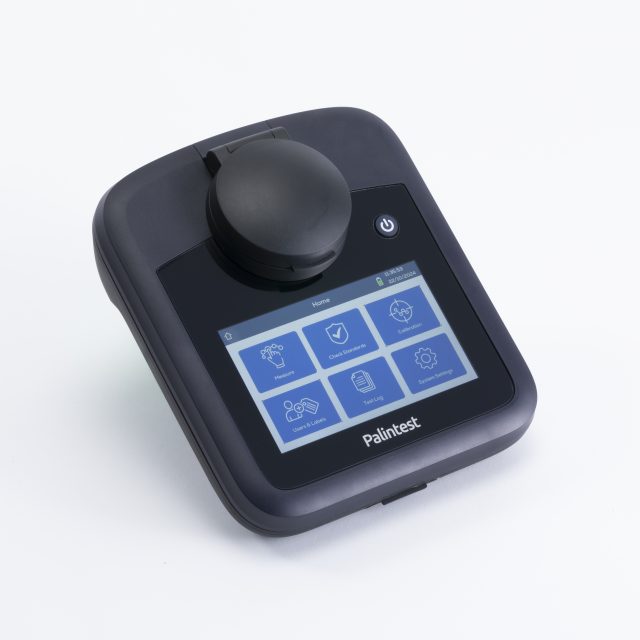
Palintest has developed the Kemio Ammonia High Range (AHR) sensor specifically to address final effluent monitoring challenges facing wastewater operators. The electrochemical platform measures total ammonia across the 0.5-15 mg/L range—precisely matching typical discharge concentrations—with results available in approximately three minutes. This rapid turnaround transforms operational decision-making.
The sealed sensor design eliminates hazardous reagent handling entirely. Each disposable Kemio sensor contains all necessary chemistry in a compact, non-hazardous format, requiring no mixing, no precise timing, and generating no toxic waste. For facilities testing multiple sites daily across dispersed treatment works, this transforms both safety protocols and waste disposal logistics. The compact packaging—100 Kemio sensors occupy the same space as just 10 traditional tube test kits—simplifies field vehicle logistics considerably.
Built-in temperature compensation ensures accurate wastewater ammonia testing across the 5-30°C range common in final effluent, eliminating the manual corrections and potential errors inherent in traditional methods. Turbidity tolerance allows direct testing on cloudy samples without filtration steps that would introduce delay and error. The Kemio platform performs reliably in challenging field conditions that would compromise colorimetric methods.
Palintest’s Connect integration adds comprehensive digital compliance management. The system automatically timestamps every result, GPS-tags sampling locations, and uploads data to secure cloud storage accessible from any device. This creates auditable records that support permit reporting requirements and provide instant documentation during regulatory inspections—transforming scattered field measurements into comprehensive compliance datasets that demonstrate proactive environmental stewardship.
Practical Applications Across Wastewater Operations
The Kemio AHR sensor complements certified laboratory analysis by enabling three critical operational functions that traditional methods cannot support effectively. For process troubleshooting, immediate feedback helps operators diagnose emerging nitrification issues and adjust aeration rates, chemical feeds, or flow distribution before problems compound into permit violations. For discharge decisions, pre-release verification provides confidence that ammonia concentrations fall within permit limits when releasing batch-treated effluent or resuming discharge after process upsets. For compliance demonstration, the ability to generate real-time documented results shows regulatory inspectors active monitoring programmes and genuine environmental commitment.
Multiple-site utilities operating dispersed treatment works gain particular operational advantage. Mobile teams can verify effluent quality across numerous locations without the logistical burden of collecting samples for return to central laboratories. The testing occurs at the point of discharge, with results available before the team moves to the next site.
Severn Trent Water, supplying 4.6 million households across the UK, successfully trialled Palintest’s Kemio platform at wastewater sites to evaluate alternatives to hazardous Nessler testing. The trial demonstrated that non-toxic Kemio sensors could simplify transport logistics, reduce disposal costs, and improve operator safety whilst maintaining measurement quality—validating how modern wastewater ammonia testing technology delivers both operational and environmental benefits.”
Moving from Compliance Burden to Operational Confidence
As environmental regulation evolves towards real-time monitoring and public data transparency, wastewater facilities face mounting pressure to demonstrate not just retrospective compliance, but proactive environmental management. Storm overflow monitoring, continuous effluent quality measurement, and public reporting of discharge events have moved from future concepts to present operational requirements.
Ammonia’s environmental significance, regulatory prominence, and role as a treatment process indicator make it a parameter that utilities cannot afford to monitor intermittently or inadequately. The facilities that thrive under increased scrutiny will be those building robust verification programmes that combine certified laboratory methods with practical field testing tools.
Technology simplification matters not because it reduces rigour, but because it removes barriers preventing consistent monitoring. When wastewater ammonia testing becomes faster, safer, and more accessible, operators test more frequently. When results arrive immediately, operational responses improve. When data flows automatically into digital compliance systems, documentation becomes routine rather than burdensome.
Palintest’s 150-year heritage in water analysis has consistently focused on making accurate testing practical for field conditions where decisions happen. The Kemio platform represents this philosophy: laboratory-grade measurement quality in a format designed for real-world operational demands. By choosing tools that make verification straightforward, utilities transform ammonia monitoring from regulatory obligation into operational confidence—protecting both compliance status and the aquatic ecosystems that depend on responsible wastewater management.
Frequently Asked Questions
What ammonia levels are acceptable in wastewater discharge?
Acceptable discharge levels vary by jurisdiction and receiving water characteristics. U.S. NPDES permits commonly specify 0.6-5 mg/L, whilst UK consents typically range from 3-10 mg/L total ammonia. Always consult your facility’s specific discharge permit for legally binding limits.
Why is ammonia more toxic in summer?
Higher water temperatures shift ammonia’s chemical equilibrium towards the unionised form (NH₃), which readily penetrates fish gills and causes respiratory distress. This is why discharge permits impose stricter summer limits when receiving water temperatures rise.
Can field testing replace laboratory analysis for compliance?
Field sensors complement rather than replace certified laboratory analysis for regulatory reporting. They provide real-time operational verification for process control and pre-discharge decisions, whilst certified labs deliver the official compliance data required by permits.
What causes nitrification to fail in treatment plants?
Common causes include temperature drops below 10°C, toxic shock loads, inadequate dissolved oxygen, pH extremes, insufficient retention time, and low alkalinity. Recovery takes weeks as bacterial populations rebuild, making prevention through consistent monitoring far preferable to remediation.
How does digital monitoring improve compliance?
Digital platforms automatically capture, timestamp, and GPS-tag results, creating comprehensive audit trails that eliminate transcription errors. Cloud-based systems enable real-time visibility across multiple sites and provide instant documented evidence during regulatory inspections.