
CCP, CIP, COP: Understanding the Three Applications Where Disinfection Monitoring Makes the Difference
In food and beverage manufacturing, chemical disinfectants are applied in several distinct ways each with its own purpose, its own chemistry requirements, and its own monitoring challenge. Understanding those differences is not just a matter of food safety theory. It is the foundation for choosing the right monitoring approach, meeting the right compliance standards, and building the kind of documented control record that modern food industry audits demand.
Three applications sit at the heart of disinfection practice across UK and European food and beverage sectors: Critical Control Points (CCP), Clean-in-Place (CIP), and Clean-out-of-Place (COP). Each is different in what it is trying to achieve and how it operates. What they share is a requirement for disinfectant concentration to be accurate, consistent, and verifiable — and a common vulnerability to monitoring methods that are too slow, too variable, or too dependent on water conditions to deliver that reliably.
Critical Control Points (CCP): Where Food Safety is Won or Lost
A Critical Control Point is a step in the food production process at which a control measure can be applied to prevent, eliminate, or reduce a food safety hazard to an acceptable level. Under HACCP — the framework mandated for food businesses across the UK and EU — CCPs must be identified, monitored at a defined frequency, and documented with records that demonstrate ongoing control.
In practice, disinfection is a CCP in a wide range of food and beverage manufacturing environments. The wash water in a fresh produce operation is a CCP. The chiller in a poultry processing facility is a CCP. The rinse stage in a beverage bottling line is a CCP. At each of these points, the disinfectant concentration in the water or on the surface must be within the specified range — and the record of that concentration, at the time of production, is the evidence that the CCP was under control.
Monitoring at a CCP needs to be fast enough to enable corrective action before a significant volume of product is affected, accurate enough to be relied upon as a compliance record, and consistent enough that the result does not depend on which operator runs the test or how clearly they can read a visual endpoint.
Clean-in-Place (CIP): Keeping the Line Running Safely
Clean-in-Place refers to the automated or semi-automated cleaning and disinfection of food processing equipment — pipelines, tanks, heat exchangers, filling systems — without dismantling it. CIP systems are a cornerstone of hygiene management in beverage, dairy, and liquid food production, where internal surfaces that cannot be accessed for manual cleaning must be sanitised between production runs.
CIP cycles typically involve a sequence of rinse, caustic clean, rinse, acid rinse, and final disinfection stages. The disinfection stage — commonly using PAA, chlorine, or chlorine dioxide — must achieve the required concentration and contact time to be effective. Monitoring that final disinfection step is critical: a CIP cycle that appears to have run correctly but delivered insufficient disinfectant concentration at the point of contact with food surfaces is a CIP cycle that has not done its job.
The challenge with CIP monitoring is that the conditions in the system at the point of testing — temperature, residual chemistry from earlier stages, dilution — can affect both the disinfectant concentration and the reliability of the test method used to measure it. A monitoring approach that is fast, robust across varying conditions, and produces a numerical result rather than a visual endpoint is significantly better suited to CIP verification than traditional titration.
Clean-out-of-Place (COP): Disassembly, Disinfection, Confidence
Clean-out-of-Place involves removing equipment components — conveyor parts, filling heads, seals, smaller pipe sections — and cleaning and disinfecting them in a dedicated wash tank or immersion system. COP is used for components that cannot be effectively cleaned in situ and that require direct access for thorough sanitation. It is common in meat and poultry processing, dairy, and fresh produce operations where equipment design makes CIP impractical for certain parts.
COP disinfection bath concentration must be maintained within the effective range throughout the cleaning cycle. As components are added to the bath and organic matter is released, disinfectant concentration degrades. Monitoring that degradation — and replenishing chemistry before concentration drops below the effective threshold — requires a testing method that is quick enough to be used regularly during an active COP cycle without extending cleaning time or disrupting production schedules.
One Range. Every Application.
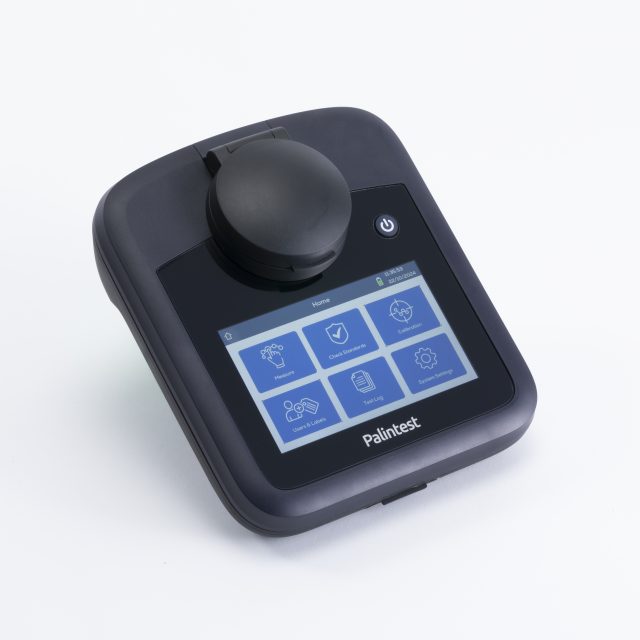
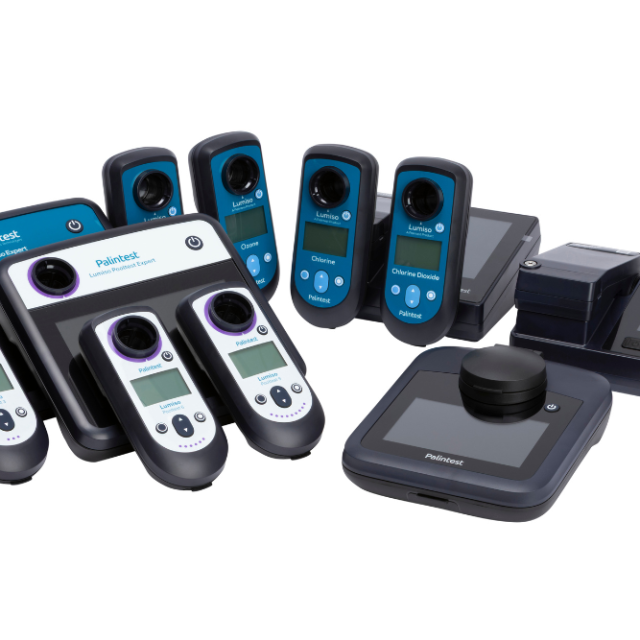
The Palintest Kemio range uses electrochemical, pre-calibrated, single-use sensors to deliver accurate disinfectant concentration results in approximately one minute — covering PAA, chlorine, and chlorine dioxide across CCP, CIP, and COP applications. No visual endpoint. No reagent preparation. No specialist training required.
Because the electrochemical measurement is not affected by water colour, turbidity, or residual chemistry from earlier process stages, the Kemio range delivers reliable results in the real conditions of each application — not just in laboratory water. Every result is automatically stored with a timestamp and operator record, building the documented monitoring history that HACCP audits, BRC certification, and retailer due diligence all require.
The Right Monitoring for Every Application
CCP, CIP, and COP each present a different monitoring challenge — but they share the same underlying requirement: a result that is fast enough to act on, accurate enough to rely on, and documented enough to stand up to scrutiny. Traditional titration methods struggle to meet all three simultaneously in the real conditions of food and beverage manufacturing.
The Palintest Kemio range is built to meet all three, across every application, with a single device that any member of the production team can use. In an industry where the cost of getting disinfection wrong is measured in food safety incidents, product recalls, and failed audits, that consistency is not a feature. It is the standard.
Frequently Asked Questions
What is a Critical Control Point (CCP) in food manufacturing?
A Critical Control Point is a specific step in a food production process where a control measure can be applied to prevent, eliminate, or reduce a food safety hazard to an acceptable level. CCPs are a core component of HACCP food safety management systems, which are mandatory for food businesses across the UK and EU. At each CCP, monitoring must occur at a defined frequency, and records must be maintained to demonstrate that the point remained under control during production.
What is the difference between CIP and COP cleaning?
Clean-in-Place (CIP) refers to the cleaning and disinfection of equipment — pipelines, tanks, and enclosed systems — without removing or dismantling it, typically using automated chemical circulation. Clean-out-of-Place (COP) involves removing equipment components and cleaning them in a dedicated wash tank or immersion system. CIP is used where internal surfaces can be reached by circulating chemistry; COP is used for components that require direct access for thorough sanitation.
Why does disinfectant concentration degrade during COP cycles?
As equipment components are immersed in a COP disinfection bath, organic matter — proteins, fats, food residues — is released into the solution. This organic load reacts with and consumes the disinfectant chemistry, reducing its concentration over time. Temperature changes and dilution from rinsing can further reduce efficacy. Regular monitoring during an active COP cycle is essential to ensure concentration remains above the effective threshold throughout the cleaning process.
Which disinfectant chemistries does the Palintest Kemio range support across CCP, CIP, and COP applications?
The Palintest Kemio range supports electrochemical monitoring of peracetic acid (PAA), chlorine, and chlorine dioxide (ClO2) — covering the full range of chemistries used across CCP, CIP, and COP applications in UK and European food and beverage manufacturing. A single device covers every application without switching methodology or equipment.
How does the Palintest Kemio range support HACCP and BRC audit requirements?
The Palintest Kemio range automatically stores every test result with a timestamp and operator identification, creating a complete and consistent monitoring record across all CCPs and cleaning applications. This data can be exported to support HACCP documentation, BRC Global Standards audit requirements, and retailer due diligence processes. Because the record is built automatically during normal production activity, there is no additional administrative burden and no risk of gaps in the documentation.