The Reality of Water Testing in Humanitarian Environments
Humanitarian water testing is often carried out in locations where resources are constrained and conditions change rapidly. Mobile treatment units, temporary distribution points, and remote villages all require regular monitoring to ensure water remains safe for consumption.
At the same time, teams may be working across large geographic areas, with limited connectivity and a mix of trained specialists and local operators. Maintaining consistent records, ensuring results are reviewed promptly, and providing oversight from regional or central offices can be difficult when data is recorded manually or stored locally.
Common challenges in humanitarian water testing include:
- Limited infrastructure for storing and sharing test results
- Difficulty providing remote oversight across multiple sites
- Delays in identifying issues due to fragmented data
- Pressure to demonstrate accountability to donors and authorities
These challenges are rarely due to a lack of technical knowledge. More often, they reflect the difficulty of managing water quality data in environments where traditional systems are impractical.
Shared Responsibility and the Importance of Remote Oversight
Humanitarian water projects typically involve multiple stakeholders. Field technicians and trained specialists carry out testing, while project managers, WASH coordinators, NGO offices, and local authorities rely on this data to make decisions and demonstrate impact.
When results are recorded on paper or stored on individual devices, oversight becomes fragmented. Central teams may only see summaries rather than raw data. Emerging issues may not be identified until they escalate. Reconstructing events during reviews or audits can be time-consuming and uncertain.
Clear, connected data is essential for maintaining control and confidence across distributed teams.
What Accountability Looks Like in Humanitarian Water Projects
Accountability in humanitarian water provision extends beyond regulatory compliance. Organisations must demonstrate that water quality is being monitored consistently, that results are reliable, and that action is taken when risks are identified.
This includes being able to show when and where samples were taken, who carried out the testing, and how results were reviewed. Increasingly, donors and partner organisations also expect clear, auditable evidence that resources are being used effectively to protect public health.
Data integrity and traceability are therefore critical, even in low-resource settings.
How Connect Supports Humanitarian Water Testing in Practice
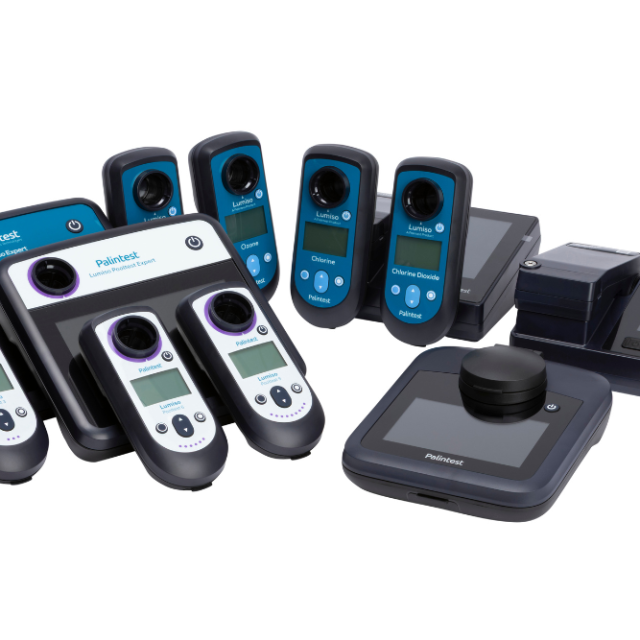
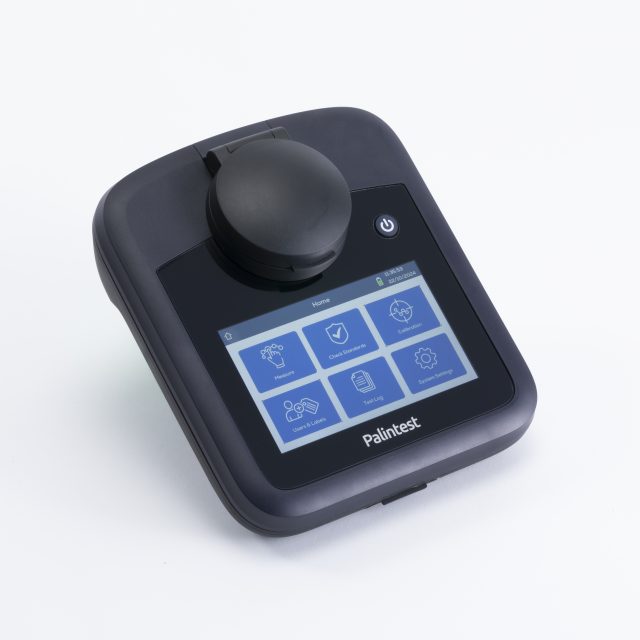
Connect integrates directly with Palintest instruments, allowing test results to be captured digitally in the field and uploaded via the Connect mobile app using QR codes or USB connection. This removes the need for paper records and reduces the risk of lost or incomplete data.
Each result is linked to a specific instrument and user, creating a clear audit trail. Where connectivity is available, results can be uploaded promptly and reviewed remotely through the Connect web platform. GPS tagging provides additional confidence by verifying sampling locations, which is particularly valuable in mobile or temporary water systems.
Once uploaded, results are accessible to project managers and coordinators regardless of location. This supports faster identification of emerging risks and enables timely intervention, even when decision-makers are not present in the field.
Corrective actions can be recorded alongside test results, creating a continuous record that shows not only what was measured, but how issues were addressed. Over time, this builds a transparent dataset that supports reporting, evaluation, and long-term programme improvement.
Value Beyond Immediate Response
While rapid response is critical in humanitarian settings, digital water testing also supports longer-term objectives. Centralised data helps organisations monitor trends, allocate resources more effectively, and build institutional knowledge across projects and regions.
For organisations operating multiple programmes, Connect provides a scalable framework that supports consistency without imposing additional burden on field teams. This balance between simplicity in the field and visibility at a central level is key to sustainable humanitarian water management.
Building Trust Through Transparent Water Quality Data
Trust is fundamental to humanitarian work. Communities need confidence that water is safe. Donors need assurance that programmes are effective. Authorities need evidence that standards are being upheld.
By transforming water quality results into secure, connected, and auditable data, Connect by Palintest helps humanitarian organisations strengthen accountability, support informed decision-making, and protect public health in the most challenging environments.
Frequently Asked Questions
How does Connect by Palintest support humanitarian water projects?
Connect by Palintest supports humanitarian water projects by enabling digital capture of water quality results in the field and providing remote visibility for project managers and coordinators.
Can Connect be used in remote or low-infrastructure environments?
Yes. Connect is designed to support field-based testing, with results uploaded via mobile devices when connectivity is available, reducing reliance on paper records.
Does Connect replace existing humanitarian testing protocols?
No. Connect supports existing testing protocols by improving how results are recorded, shared, and reviewed, without changing established methods.
How does GPS tagging help in humanitarian water operations?
GPS tagging helps verify where samples are taken, which is particularly valuable for mobile treatment units and temporary distribution points.
Is Connect suitable for both emergency response and long-term projects?
Yes. Connect by Palintest is suitable for rapid emergency deployments as well as longer-term humanitarian water programmes that require consistent monitoring and reporting.