
China’s Food and Beverage Industry: A £1 Trillion Market and What It Means for Chemical Monitoring
China’s food and beverage industry is not just large — it is a structural force in global food production. Accounting for roughly one tenth of total global food output, the sector represents a £1 trillion market supported by more than 42,000 large-scale factories, each turning over in excess of £5 million annually. For businesses operating in food safety and water quality testing, the scale of that market is only part of the story. The direction it is travelling in is just as significant.
Scale That Demands Precision
The sheer volume of food processed in China creates a monitoring challenge that manual methods are increasingly ill-equipped to meet. Across sectors from fruit juice bottling and water production to fresh produce washing and meat processing, the need for consistent, verifiable disinfection control is the same as anywhere else in the world — but the scale at which it operates is in a different category entirely.
China is home to the world’s largest water bottling company, Nong Fu Spring, and supplies a significant share of global processed food output across categories including salad vegetables, poultry, and — perhaps less well known — sausage casings, with an estimated 80% of Europe’s sausage skin originating from Chinese manufacturing. These are not niche operations. They are high-throughput, internationally connected supply chains where a food safety failure has consequences far beyond the factory gate.
A Market in Transition
What makes the Chinese F&B market particularly relevant for chemical monitoring right now is a fundamental shift in how food safety is being managed at the processing level. Traditional hot treatment methods — long the standard approach in Chinese food manufacturing — are giving way to cold aseptic filling (CAF), a trend accelerated by both regulatory pressure and growing awareness of the advantages CAF offers in terms of product quality and energy efficiency.
CAF applications rely on disinfectant chemistries such as peracetic acid (PAA) — which require precise concentration monitoring to be both effective and compliant. This technology transition is creating a new and growing demand for testing solutions that can keep pace with production volumes without adding complexity to the line.
From Titration to Real-Time Monitoring
Titration remains the dominant testing method in the majority of Chinese food processing facilities. It is familiar, established, and widely understood — but it is also slow, operator-dependent, and poorly suited to the pace at which modern CAF-based processing lines operate. As plants scale up and chemistries become more complex, the limitations of titration are becoming harder to ignore.
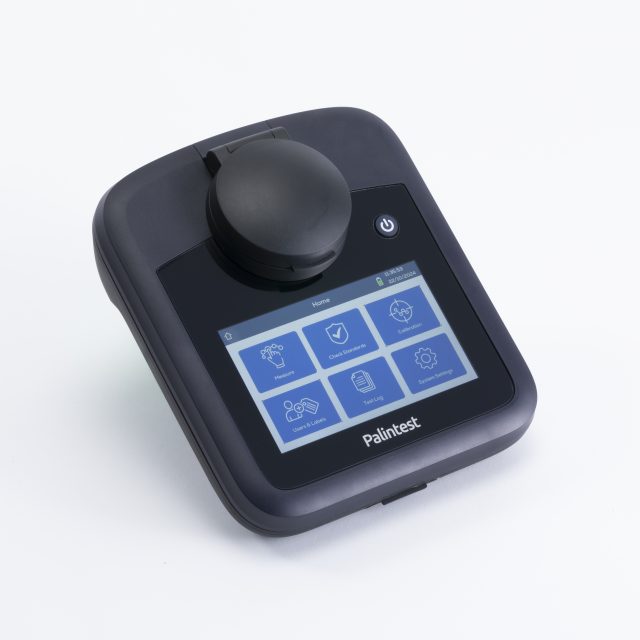
The Palintest Kemio range uses electrochemical, pre-calibrated, single-use sensors to deliver accurate disinfectant concentration results in seconds — covering PAA monitoring across Chinese food and beverage processing applications. No specialist training is required, no reagent preparation, and no variability between operators. Results are stored digitally, creating a timestamped audit trail that supports compliance and traceability requirements.
Processors already working with the Kemio range cite speed and ease of use as the primary drivers for making the switch. For a facility running multiple shifts across a high-output production line, those advantages compound quickly. The move from titration to Kemio is not a radical change in philosophy — it is a practical upgrade that fits the way modern food processing actually works.
Where Kemio Fits in the China F&B Landscape
Across the key sectors of the Chinese food and beverage industry, Kemio’s capability makes it a natural fit for facilities managing PAA chemistries. In fruit juice and beverage production, PAA is widely used for CAF line cleaning and packaging sterilisation; in water bottling, PAA monitoring is a standard requirement. Fresh produce operations and poultry and meat processing facilities are beginning to adopt the same CAF-driven approach that has already transformed the sector in Western markets, with PAA increasingly central to wash water control.
In each of these applications, the monitoring challenge is the same: accurate, fast, documented. Kemio addresses all three — and does so with a device that can be operated on the production floor by the people already running the line.
The Opportunity Is Already Here
China’s food and beverage industry is not an emerging opportunity — it is an active one. The scale is established, the technology transition is underway, and the demand for faster, more reliable monitoring is being driven by the market itself. Processors who have already made the move from titration to real-time testing are not waiting for the industry to catch up. They are using the efficiency gains to compete more effectively in an international market where food safety compliance is table stakes.
For Palintest, China is not a market to watch. It is a market to be in — with the right product, the right local support, and the right understanding of where the industry is heading. Kemio is built for exactly the kind of high-throughput, multi-chemistry environments that define Chinese food and beverage processing. The question is not whether the fit is right. It is how quickly we can put it in front of the people who need it.
Frequently Asked Questions
How large is China’s food and beverage industry?
China’s food and beverage sector is valued at approximately £1 trillion and accounts for around one tenth of total global food output. The industry comprises more than 42,000 large-scale processing facilities with annual turnovers exceeding £5 million, spanning sectors from beverages and fresh produce to meat processing and packaged foods.
What is CAF and why is it significant for chemical monitoring in China?
CAF stands for cold aseptic filling — a production approach that uses chemical disinfectants rather than heat to achieve sterile conditions during processing and packaging. Chinese food manufacturers are transitioning from traditional hot treatment to CAF at scale, driven by regulatory modernisation and the product quality advantages CAF offers. This shift creates a direct and growing need for precise disinfectant concentration monitoring, as CAF chemistries require accurate dosing to be both effective and compliant.
Why are Chinese food processors moving away from titration?
Titration is slow, operator-dependent, and not well suited to the pace of high-throughput processing lines. As Chinese facilities scale up and adopt more complex CAF chemistries, the limitations of manual titration become increasingly apparent. Real-time monitoring tools like Kemio offer faster results, consistent accuracy regardless of operator, and digital data storage — all of which are difficult to achieve with traditional titration methods.
Which disinfectant chemistries does Kemio support for Chinese F&B applications?
Kemio supports monitoring of peracetic acid (PAA) — covering one of the main chemistries used across Chinese food and beverage processing sectors including fruit juice bottling, water production, fresh produce washing, and meat and poultry processing.
How does Palintest support customers in the Chinese market?
Palintest operates in China through IMP China, an Authorised Service Provider and official local partner that provides on-the-ground technical support, service, and expertise for Palintest’s water analysis products. This local presence means Chinese food and beverage processors have access to both the technology and the specialist knowledge needed to implement and maintain effective monitoring programmes.