The Legionella Challenge in Building Water Systems
Legionella pneumophila multiplies in water systems between 25-42°C—precisely the temperature range where building plumbing operates. The bacteria colonise biofilms on pipe walls, amplify within amoebae, and transmit through aerosols from showers, cooling towers, and decorative fountains. For immunocompromised patients, elderly residents, or anyone with underlying respiratory conditions, Legionella exposure can prove fatal. Legionnaires’ disease carries mortality rates of 10-30% even with treatment.
Healthcare facilities face particularly acute risks. Hospital building water system disinfection must protect vulnerable patients whilst avoiding chemical exposures that could interfere with dialysis, chemotherapy, or medical device sterilisation. The 2017 Centers for Medicare & Medicaid Services mandate requires hospitals and long-term care facilities to implement water management programmes based on ASHRAE Standard 188, including hazard analysis, control measures, and regular validation monitoring.
Universities and commercial buildings, whilst serving generally healthier populations, still harbour Legionella colonisation risks. Seasonal occupancy creates prolonged low-demand periods where water stagnates. Athletic facilities generate aerosols. Ageing infrastructure accumulates biofilm. A 2006 study found Legionella in 60% of hot water systems using chlorine disinfection—a baseline that prompted many facilities to seek more effective approaches.
Why Monochloramine Emerged as the Building Water System Disinfection Solution
Monochloramine has transformed building water system disinfection since hospitals began adopting it in the 2000s. Unlike chlorine, which reacts rapidly and dissipates quickly, monochloramine persists longer and penetrates biofilms more effectively. Research demonstrates dramatic results: facilities converting from chlorine to monochloramine reduced Legionella colonisation from 60% of sampling points to just 4%. Hospital studies show similar success, with Legionella positivity dropping from 53% to 9% after monochloramine installation.
The chemistry mirrors municipal secondary disinfection: chlorine combines with ammonia to form monochloramine (NH₂Cl). However, building systems operate as closed environments where maintaining the correct chlorine-to-ammonia ratio becomes critical. Insufficient chlorine allows free ammonia to persist, providing nutrients for nitrifying bacteria that can collapse residuals. Excess chlorine creates dichloramine and trichloramine, producing objectionable taste, odour, and potential corrosion issues.
Building water system disinfection programmes must verify conditions throughout the plumbing network, not just at central generation points. Water age varies from hours near booster systems to days at distant fixtures. Temperature differences between floors alter chemical reaction rates. Dead-leg pipes create stagnant zones where residuals deplete rapidly. This spatial variability demands distributed monitoring that traditional laboratory analysis struggles to support economically.
How Palintest’s Kemio Platform Enables Practical Verification
Facilities teams managing building water system disinfection face practical constraints that academic research studies typically ignore. Testing must occur across dozens of sampling points during routine maintenance rounds. Results need to inform immediate decisions about adjusting chemical feed rates or investigating problem areas. Equipment must be portable enough for single-person operation whilst climbing between floors. Traditional laboratory methods requiring sample collection, transport, and days of turnaround simply don’t support this operational reality.
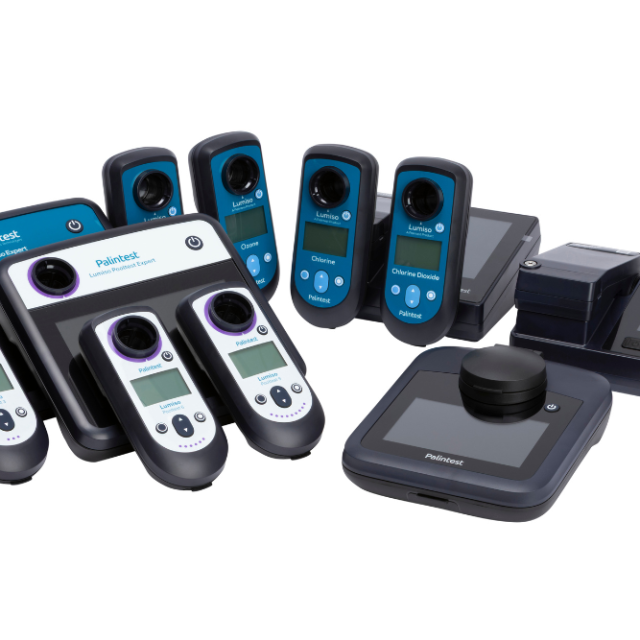
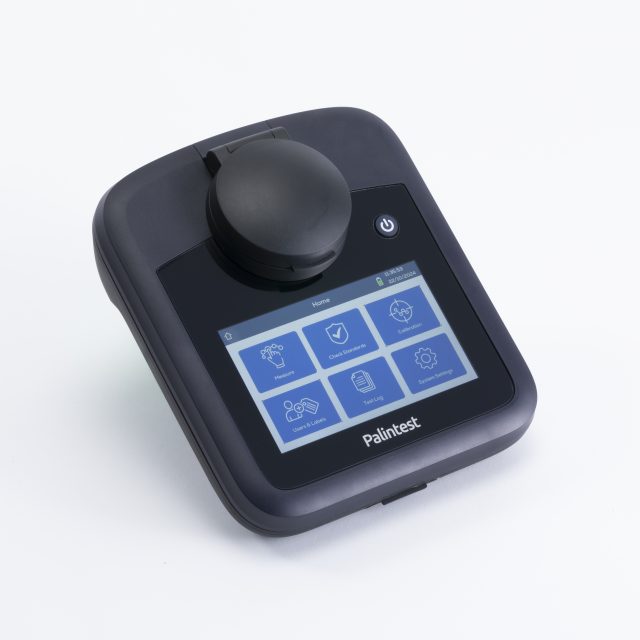
Palintest’s Kemio platform addresses these challenges by bringing laboratory measurement quality to field conditions. The Monochloramine (MOA) sensor measures 0.2-5.0 mg/L residuals—covering the typical 1.5-2.5 mg/L target range facilities maintain. The Ammonia Low Range (ALR) sensor detects 0.2-2.0 mg/L free ammonia. Both deliver results in under five minutes using sealed electrochemical sensors requiring no reagent handling.
The critical advantage for building water system disinfection lies in combined testing capability. Facilities engineers can measure both monochloramine and free ammonia from a single tap during routine rounds, immediately revealing whether the system maintains appropriate ratios. Temperature compensation across 5-50°C ensures accurate measurements in both cold water mains and hot water returns. Turbidity tolerance allows testing directly at fixtures without filtration steps that complicate field sampling.
Palintest’s Connect integration transforms scattered spot checks into comprehensive monitoring programmes. The platform automatically timestamps results, GPS-tags sampling locations within the building, and uploads data to cloud-based dashboards accessible to entire facilities teams. Supervisors can identify spatial patterns showing where residuals consistently run low, which floors experience ratio drift, and which fixtures require infrastructure investigation—all without compiling spreadsheets from handwritten field notes.
Practical Implementation Across Building Types
Hospitals implementing building water system disinfection with monochloramine use Palintest’s Kemio sensors to verify performance across critical areas: patient care units where immunocompromised individuals face highest risk, hot water returns where Legionella amplification occurs most readily, and distant wings where residual decay proves most severe. The rapid testing enables facilities staff to investigate patient complaints immediately, adjusting dosing or flushing problem areas before small issues escalate.
Universities managing seasonal occupancy patterns benefit particularly from verification capabilities during building reopening. After summer closures create extended stagnation, facilities teams use Kemio sensors to verify that monochloramine residuals have re-established throughout dormitories and academic buildings before students return. The portable format allows single technicians to test dozens of fixtures daily whilst performing other maintenance tasks.
Commercial estates operating monochloramine systems for multiple buildings use the digital tracking to demonstrate regulatory compliance. When building water system disinfection programmes require documented evidence of control measure effectiveness, Palintest Connect provides automatically generated compliance reports showing testing frequency, spatial coverage, and residual trends over time—exactly what inspectors request during facility audits.
Service engineers installing monochloramine generation systems at healthcare facilities and municipal buildings can use Palintest’s Kemio platform to validate installations before handover. The combination of 1.3-minute monochloramine testing and 4.5-minute ammonia verification enables technicians to commission systems confidently across multiple sampling points, demonstrating to facility managers that dosing equipment maintains appropriate ratios throughout the building.
Moving Towards Proactive Building Water Management
Regulatory evolution around building water system disinfection reflects growing awareness that premise plumbing harbours risks distinct from municipal distribution. CMS requirements, state-level Legionella regulations, and ASHRAE standards all emphasise documented water management programmes with validation monitoring. Facilities that treat verification as checkbox compliance rather than genuine operational control will struggle as enforcement intensifies.
Modern testing technology removes the historical barriers—lengthy procedures, laboratory dependence, fragmented data—that prevented comprehensive monitoring. When building water system disinfection verification becomes practical rather than aspirational, facilities managers can operate with confidence rather than concern. Problems get identified through routine testing before they manifest as Legionella detections or occupant illnesses.
Palintest’s 150-year heritage in water quality has consistently focused on bringing measurement precision to environments where operational decisions happen. The Kemio platform for monochloramine and ammonia represents this philosophy applied to building water systems: enabling facilities professionals to verify disinfection effectiveness with the
same rigour municipalities bring to distribution management. By choosing tools that make comprehensive monitoring achievable, building operators transform water safety from compliance burden into operational confidence.
Frequently Asked Questions
Why do building water systems need disinfection beyond municipal treatment?
Building plumbing creates conditions where Legionella amplifies: temperatures of 25-42°C, biofilm accumulation on pipes, stagnation during low demand, and nutrient sources from corrosion. Municipal chlorine dissipates before reaching distant fixtures, leaving buildings responsible for maintaining protective residuals throughout their systems.
How effective is monochloramine against Legionella in buildings?
Research shows monochloramine reduces Legionella colonisation from 60% of sampling points to 4-9% in hospital and municipal building studies. The persistent residual and biofilm penetration capability prove significantly more effective than chlorine alone for building water system disinfection.
What monochloramine and ammonia levels should buildings maintain?
Facilities typically target 1.5-2.5 mg/L monochloramine residuals throughout the system. Free ammonia should remain below 0.1 mg/L to prevent nitrification. The chlorine-to-ammonia ratio at generation should be 4:1 to 5:1 by weight to form predominantly monochloramine.
How does Palintest’s Kemio platform support building testing programmes?
Kemio enables facilities staff to test both monochloramine and free ammonia in under 5 minutes at each sampling point during routine rounds. GPS-tagged digital results uploaded to Palintest Connect create comprehensive documentation showing spatial coverage and trends—exactly what water management programmes and regulatory compliance require.
Are monochloramine systems safe for all building applications?
Monochloramine is safe for drinking, washing, and most medical applications. However, dialysis units must remove monochloramine before use, as it can cause haemolytic anaemia if it contacts blood directly. Fish tanks also require dechloramination. Facilities should consult water quality specialists when implementing systems.