Why Fresh Produce Is High Risk
Leafy greens such as lettuce, spinach, and rocket are particularly vulnerable to microbial contamination. Pathogens including E. coli, Salmonella, and Listeria can be introduced at the farm, during harvest, or through contact with contaminated water or surfaces. Once embedded in the complex leaf structures of produce, they are difficult to remove by washing alone without the support of an effective disinfectant.
In Australia and New Zealand, food businesses are required to comply with standards set under FSANZ (Food Standards Australia New Zealand), which mandate controls to minimise microbiological hazards. With export markets — including Japan, where ANZ fresh produce has a strong presence — applying additional scrutiny, traceability and documented compliance are increasingly non-negotiable.
Disinfectants Used in Salad Washing
The most commonly used disinfectants in commercial salad washing operations include chlorine (Cl), chlorine dioxide (ClO2), and peracetic acid (PAA). Each has specific performance characteristics, and each requires accurate dosing to be both effective and safe.
Chlorine dioxide in particular has become increasingly prevalent in the ANZ region. It is a selective oxidiser that destroys a broad spectrum of pathogens without forming the same harmful by-products associated with chlorine. Zychem Technologies, one of Australasia’s leading chlorine dioxide specialists and a Palintest Preferred Partner, supply ClO2 solutions specifically formulated for meat, poultry, and fresh produce applications — reflecting the growing uptake of this chemistry across the region’s food processing sector.
Regardless of the chemistry chosen, the same challenge applies: the effective concentration range is narrow. Too little, and pathogens survive. Too much, and processors risk regulatory breach, produce tainting, and potential equipment damage. The difference between safe and unsafe can come down to parts per million.
The Consequences of Poor Monitoring
Traditional titration-based testing methods can be slow, operator-dependent, and poorly suited to fast-moving production environments. A result that takes ten minutes to process is only useful if the wash water chemistry has not drifted in that time — which, in a high-throughput facility, it very well may have.
Underdosing creates clear food safety risk. Overdosing creates its own set of problems: it can lead to produce that fails taste or odour thresholds, damage to stainless steel equipment, and difficulties with regulatory audits. In export scenarios, where incoming goods may be tested at the border, inconsistent disinfection records can result in shipment rejection.
How Kemio Addresses the Challenge
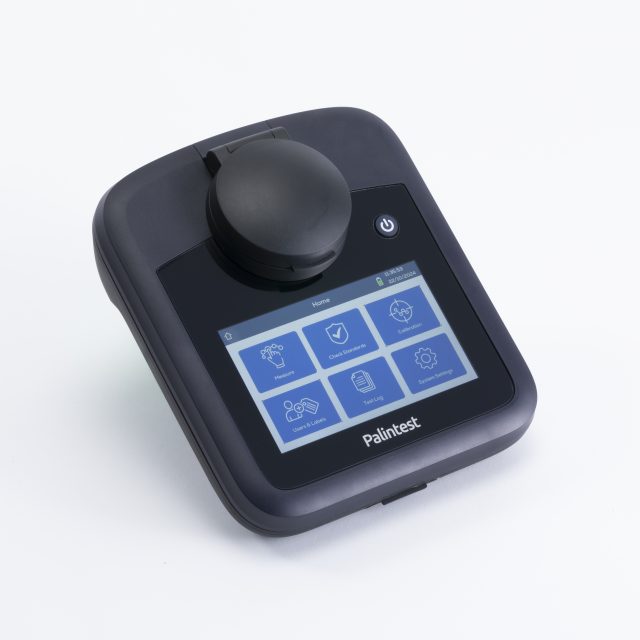
The Palintest Kemio range is designed specifically for food and beverage processing environments where speed and accuracy cannot be traded off against each other. It uses single-use, pre-calibrated sensors to eliminate the variability associated with manual reagent preparation, delivering results in seconds without specialist training.
For salad washing applications, Kemio supports monitoring of chlorine, chlorine dioxide, and PAA — covering the full range of chemistries currently used in ANZ fresh produce operations. Results are stored digitally and can be exported for audit and traceability purposes, supporting compliance with FSANZ requirements and customer due diligence requests.
In a sector where margins are tight and the consequences of a food safety incident can be brand-ending, the case for real-time, reliable monitoring is straightforward. But the case for Kemio specifically goes beyond speed — it is about consistency, traceability, and giving your team a tool that works as hard as they do. Whether you are managing a single wash line or a multi-site operation supplying fast food chains or export markets, Kemio brings the accuracy and confidence that modern fresh produce processing demands.
The Bottom Line for ANZ Fresh Produce Processors
Food safety in fresh produce is not a box-ticking exercise — it is the foundation on which customer trust, export access, and brand reputation are built. In a market where a single contamination incident can trigger recalls, regulatory action, and lasting reputational damage, the ability to monitor disinfection in real time is not a luxury. It is a baseline expectation.
For ANZ processors navigating the demands of domestic compliance, export scrutiny, and increasingly complex supply chains, Kemio offers something simple: certainty. Fast results, reliable data, and a clear audit trail — delivered by a device that anyone on your production floor can operate.
Real-time monitoring will not replace good process. But it will tell you, immediately, when your process needs attention. In salad washing, that speed of information could be the difference between a safe product and a serious incident.
Frequently Asked Questions
1. What disinfectants are commonly used in commercial salad washing?
The most widely used disinfectants in fresh produce washing are chlorine, chlorine dioxide (ClO2), and peracetic acid (PAA). Chlorine dioxide is increasingly preferred in the ANZ region due to its broad-spectrum efficacy and lower by-product profile. The best choice depends on the specific produce type, regulatory environment, and existing equipment.
2. Why is it important to monitor disinfectant levels in salad washing water?
Disinfectants are only effective within a specific concentration range. Levels that are too low fail to adequately reduce pathogens such as E. coli and Listeria. Levels that are too high can taint the produce, damage equipment, and cause regulatory issues. Real-time monitoring ensures concentrations stay within the correct parameters throughout the wash process.
3. What regulatory standards apply to fresh produce washing in Australia and New Zealand?
Fresh produce processors in ANZ must comply with FSANZ (Food Standards Australia New Zealand) requirements, which set out controls for microbiological hazards in food production. Export markets, including Japan, may impose additional requirements. Documented monitoring records are essential for demonstrating compliance during audits.
4. How does the Palintest Kemio improve on traditional disinfection testing methods?
Traditional titration-based testing is slow and operator-dependent, making it poorly suited to high-throughput production environments. Kemio uses pre-calibrated, single-use sensors that deliver results in seconds, require minimal training, and eliminate the variability of manual reagent preparation. Digital data storage also supports traceability and audit readiness.
5. Which Kemio parameters are relevant for salad washing applications?
Kemio supports testing for chlorine (Cl), chlorine dioxide (ClO2), and peracetic acid (PAA) — the three disinfectant chemistries most commonly used in commercial fresh produce washing operations across the ANZ region. This makes it a versatile single-device solution for facilities managing multiple product lines or switching between chemistries.
Find out how Kemio can support your fresh produce operation — visit the Kemio product page or contact our ANZ team.