
Why Real-Time Disinfection Monitoring Is Non-Negotiable in US Commercial Salad Washing
The US commercial salad washing sector has been shaped by some of the most high-profile food safety incidents in modern American food history. Outbreaks linked to romaine lettuce, spinach, and other leafy greens have driven a wave of regulatory change, retailer pressure, and consumer scrutiny that has fundamentally raised the standard for what food safety in fresh produce processing actually looks like. In this environment, disinfection monitoring is not a back-office compliance activity. It is front-line food safety — and the accuracy, frequency, and documentation of that monitoring has never mattered more.
The Leafy Green Food Safety Challenge
Leafy greens are among the highest-risk fresh produce categories in the US food system. They are consumed raw, grown close to the ground, irrigated with water that may carry agricultural runoff, and harvested and processed at speed under conditions that create multiple contamination pathways. E. coli O157:H7, Salmonella, Listeria, and Cyclospora have all been implicated in leafy green outbreaks that resulted in illnesses, hospitalisations, deaths, and nationwide recalls affecting hundreds of millions of dollars of product.
The wash line is the critical intervention point. Disinfectants — chlorine, chlorine dioxide (ClO2), and peracetic acid (PAA) — are used to reduce pathogen load in wash water and on product surfaces. But their effectiveness depends entirely on being present at the right concentration, maintained consistently throughout the wash cycle, and monitored with sufficient frequency to catch drift before it becomes a food safety event.
The Regulatory and Industry Response
FSMA’s Produce Safety Rule has established enforceable federal standards for fresh produce operations, including requirements for agricultural water quality and sanitation of food contact surfaces. In parallel, the leafy greens industry has developed its own enhanced standards through bodies such as the California Leafy Greens Marketing Agreement (LGMA), which sets detailed requirements for water testing, disinfection practices, and record-keeping that go beyond federal minimums in some areas.
Major retail customers add a further layer. The largest US grocery chains and food service operators now conduct regular supplier audits against standards such as SQF and GLOBALG.A.P., with disinfection monitoring records a standard component of the audit scope. A processor that cannot produce complete, consistent monitoring data across a full production period is a processor that risks losing a retail contract — regardless of whether a regulatory inspection has identified a problem.
The Gap Between Requirement and Reality
Despite the weight of regulatory and commercial pressure, many US salad washing operations continue to rely on titration-based monitoring that is poorly matched to the demands of the environment. High-throughput lines processing tonnes of leafy greens per hour generate wash water conditions — high organic load, temperature variation, pH fluctuation — that cause disinfectant concentrations to shift quickly. A titration test that takes several minutes to complete and depends on visual endpoint detection in increasingly turbid, discoloured water is not a reliable monitoring method for these conditions.
The consequence is a monitoring regime that is either less frequent than it should be, less accurate than it needs to be, or both. In a sector that has already experienced the reputational and financial consequences of food safety failures, that gap is not a theoretical risk. It is a live one.
How the Palintest Kemio Range Closes the Gap
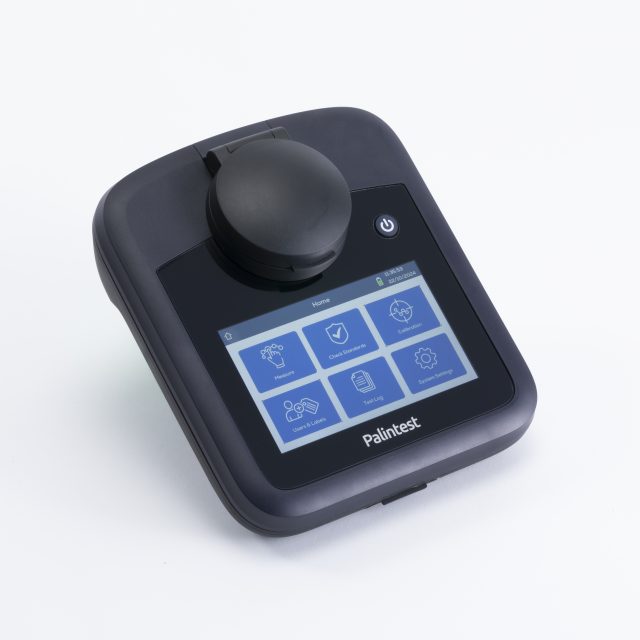
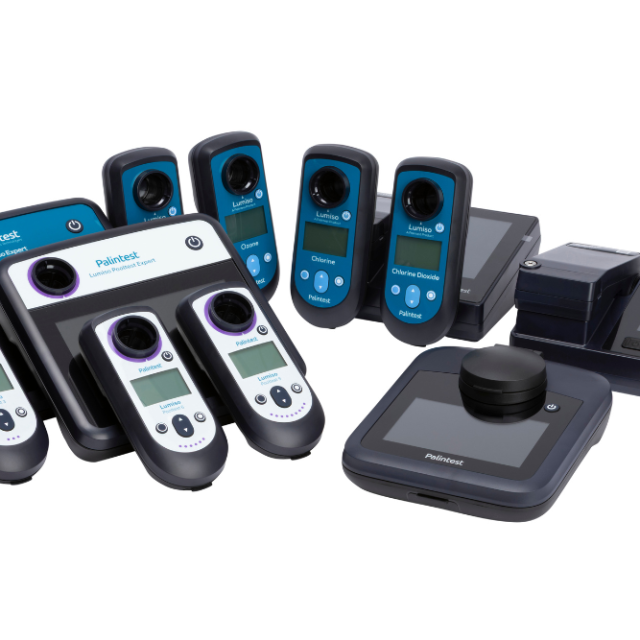
The Palintest Kemio range uses electrochemical, pre-calibrated, single-use sensors to deliver accurate results for chlorine, chlorine dioxide, and PAA in approximately one minute — regardless of the turbidity or colour of the wash water. No visual endpoint. No reagent preparation. No specialist training. No variability between operators. Results are available fast enough to act on before conditions drift further, and every result is automatically stored with a timestamp and operator record.
For US salad washing operations, that combination — speed, accuracy in real wash water conditions, and automatic audit trail — addresses the three core weaknesses of titration simultaneously. Testing can happen as often as the HACCP plan or retailer standard requires. The data produced is reliable regardless of who runs the test. And the record is there when the auditor asks for it.
The Wash Line Is Where It Counts
The US leafy greens industry has learned, at significant cost, what happens when food safety on the wash line falls short. The regulatory and commercial infrastructure that has been built in response is designed to prevent that from happening again — but it only works if the monitoring underpinning it is genuinely fit for purpose.
The Palintest Kemio range gives US salad washing operations the electrochemical monitoring precision, speed, and documented audit trail that modern fresh produce food safety demands. Because in a sector where the consequences of getting it wrong are measured in outbreaks, recalls, and lost contracts, monitoring that almost works is not good enough.
Frequently Asked Questions
What disinfectants are used in US commercial salad washing operations?
The primary disinfectants used in US commercial salad washing are chlorine, chlorine dioxide (ClO2), and peracetic acid (PAA). Chlorine is the most widely used due to its cost-effectiveness and familiarity, but requires careful pH management to maintain efficacy. ClO2 and PAA are increasingly preferred for their broader-spectrum performance and more favourable residue profiles, particularly in operations supplying markets with strict chemical residue standards.
What are the key food safety standards US salad washing operations must comply with?
US salad washing operations are subject to FSMA’s Produce Safety Rule, which sets enforceable federal standards for agricultural water and sanitation. Operations supplying California retail markets may also need to comply with the Leafy Greens Marketing Agreement (LGMA) standards. Retail customers frequently require additional certification against SQF, GLOBALG.A.P., or similar schemes, all of which include disinfection monitoring and record-keeping requirements.
Why have leafy greens been linked to so many foodborne illness outbreaks in the US?
Leafy greens are particularly high-risk because they are consumed raw, grown close to soil, and subject to contamination from agricultural water, wildlife, and cross-contamination during processing. Their complex leaf structures can harbour pathogens that are difficult to remove by washing alone without effective disinfectant chemistry. The combination of wide distribution, raw consumption, and multiple contamination pathways makes leafy greens one of the most epidemiologically significant fresh produce categories in the US food system.
How does wash water turbidity affect disinfection monitoring accuracy?
Traditional titration methods rely on visual endpoint detection — identifying a colour change in the sample during the test. As wash water becomes more turbid or discoloured through organic load from produce, this endpoint becomes increasingly difficult to detect accurately, leading to unreliable results. Electrochemical monitoring, as used in the Palintest Kemio range, does not depend on visual detection and delivers accurate results regardless of water colour or turbidity.
How frequently should disinfection be monitored in a commercial salad washing operation?
Monitoring frequency should be determined by the HACCP plan and reflect the rate at which disinfectant concentration can change under actual production conditions. In high-throughput salad washing environments with high organic load, that can mean significant concentration drift within a single hour. As a general principle, monitoring should be frequent enough that any drift can be identified and corrected before it affects a meaningful volume of product — which in practice means real-time or near-real-time testing rather than periodic manual checks.