The US poultry industry
In 2019, the USDA estimated the value of poultry production in the United States to be over $40 billion, with the average person consuming 112.5 pounds of poultry.
Healthier lifestyles are pushing red meat consumers towards leaner turkey and chicken products. As a result, the poultry industry is expected to grow significantly over the next few years.
Regulations for US poultry processing
The American poultry industry is regulated by the US Department of Agriculture – Food Safety Inspection (USDA-FSIS) via two acts:
- The Federal Meat Inspection Act
- Poultry Products Inspection Act
Poultry processing plants can have over 16 unique chemical application points. Optimising chemical usage is a key part of any poultry processing set up as the cost of these chemicals can exceed seven figure digits per plant, per year.
What chemicals are used for cleaning and disinfection in poultry processing?
Cleaning and disinfection are essential for reducing the risk of infectious diseases caused by microorganisms such as bacteria and viruses. For many years, chlorine and its derivatives have been widely used due to their proven effectiveness and affordability. However, their performance can be affected by factors such as temperature and organic matter. As a result, alternative disinfectants like peracetic acid (PAA) have become increasingly popular, offering reliable, broad-spectrum disinfection across a wider range of conditions.
Chlorine disinfection
Along with general disinfection, chlorine is also used for Pathogen Reduction Treatments (PRTs) or Direct Intervention (DI), where poultry is rinsed with chlorinated water to kill pathogenic surface bacteria.
Chlorine is inexpensive, requires a relatively short contact time with pathogens and is extremely effective in killing Campylobacter and Salmonella. However, using a chlorine-based disinfectant presents several challenges:
- Chlorine is deactivated by organic matter. In waters heavily contaminated with blood, feathers and fats maintaining a free chlorine residual can be difficult. This requires very high dosing rates.
- Chlorine reacts with organic material to form a range of harmful disinfection by-products such as HAAs and THMs.
- Chlorine has been found to be ineffective in spray applications and loses efficacy in dip tanks.
- At higher concentrations, chlorine has a bleaching effect on poultry which impacts the aesthetics of the final product.
- Chlorine gas is extremely toxic to humans and animals, if mishandled it can have serious effects on health.
- In 1977 the EU banned washing chicken with chlorine. Although it is acceptable in the American poultry industry, there is a growing aversion towards using chlorine in poultry processing and it may create a barrier to international trade.
Peracetic acid
PAA is a versatile ‘green’ antimicrobial that can either be applied at low concentrations over longer exposures or at high concentrations (as high as 2,000 ppm) for a short period of time, with a log reduction efficacy often greater than chlorine.
PAA is a popular sanitiser in the poultry sector due to reduced levels of disinfection by-products (DBP), no lasting residual and a high tolerance for organic load. Peracetic acid is accepted globally and can be used on products labelled as ‘organic’.
PAA is primarily used in process water for washing, rinsing, or chilling poultry as well as a range of surface sanitation applications. Due to its water-soluble nature, PAA can completely cover the carcass surface during submersion procedures like chilling. It has been demonstrated that a high concentration of PAA (1000 ppm) used in a finishing chiller or dip tank resulted in more than 2.0 Log10 CFU /ml inactivation in both Campylobacter and Salmonella counts.
Peracetic acid is an expensive disinfectant and is often applied at higher concentrations than traditional disinfectants, therefore dosing levels must be tightly controlled to avoid increasing costs.
Disinfection verification in poultry processing
Regardless of the disinfectant used, it is critical that accurate and regular monitoring is carried out at the poultry processing facility. Inaccurate measurements can lead to underdosing and overdosing, both of which can have severe impacts.
Underdosing will not achieve the required disinfection levels to make the product safe for consumption, whilst overdosing can result in high costs, distort the quality and aesthetic of the end product, and in extreme cases create an unsafe working environment.
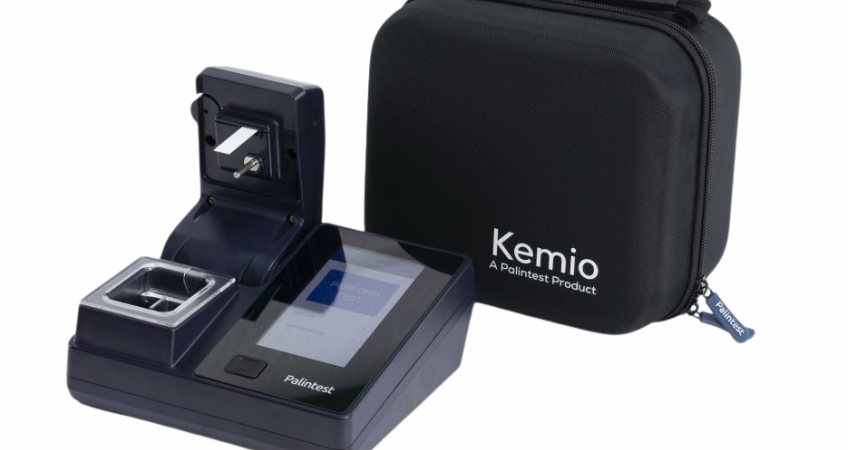
For optimal quality control, efficient monitoring needs to be established to ensure the correct amount of sanitiser is being used. Kemio has specifically been designed to support effective sanitisation in food and beverage processing – it is the most simple and effective way of testing sanitisers in water.
Kemio technology offers significant advantages compared to alternative techniques. Unlike traditional methods, Kemio has minimal user input which reduces potential operator errors and variation in results.